-
WhatsApp / Mob : +86 156 5177 2521
-
البريد الإلكتروني : mrwin@cnbangwin.com
WhatsApp / Mob : +86 156 5177 2521
البريد الإلكتروني : mrwin@cnbangwin.com

Nitrogen Generator Working Principle: Complete Guide to Nitrogen Production
Aug 26 , 2026
Nitrogen generators supply industrial plants with on-site nitrogen gas.
Instead of using delivered nitrogen cylinders, these systems separate nitrogen from the air.
As a result, nitrogen generators can save on transportation costs and improve supply flexibility.
But how does a nitrogen generator work? The Nitrogen Generator Working Principle will vary depending on the separation technology.
The three primary industrial nitrogen generation technologies are:
l Pressure Swing Adsorption ( PSA )
l Membrane separation
l Cryogenic air separation
PSA nitrogen generators can be used in a wide range of industrial applications.
Not only are they cost-effective, but they also strike a good balance between purity, capacity, energy usage, and footprint.
At Nanjing Bangwin Gas, we offer customized nitrogen generator systems to meet your specific industrial needs.
Nanjing Bangwin Gas Official Website
Simply put, a nitrogen generator is a piece of equipment that separates nitrogen from compressed air.
As a reminder, atmospheric air is made up of roughly:
l 78% nitrogen
l 21% oxygen
l Trace amounts of argon and other gases
Nitrogen generators remove oxygen and other undesired gases from the air.
The result is a stream of nitrogen at your desired purity level.
Nitrogen generators are capable of filling many different roles in industrial processes. Some common uses include:
l Food packaging
l Electronic manufacturing
l Chemical processing
l Metal processing
l Pharmaceutical manufacturing
l Oil and gas
A nitrogen generator follows the same general process no matter what technology it uses:
Step 1: Atmospheric Air Intake
First, the nitrogen generator intakes ambient air from the surrounding atmosphere.
Step 2: Air Compression
An air compressor pressurizes the intake air.
Step 3: Air Purification
Various filters and dryers eliminate unwanted contaminants such as:
l Dust
l Oil vapor
l Water vapor
Anything else that could harm the system internals
Step 4: Gas Separation
Now the nitrogen generator will separate nitrogen from oxygen to produce pure nitrogen.
The separation process will depend on what type of nitrogen generator you have.
Step 5: Nitrogen Collection
Produced nitrogen will make its way into a buffer tank.
Step 6: Nitrogen Supply
Finally, the system can send nitrogen to downstream processes.
In summary, nitrogen generators turn regular air into industrial grade nitrogen.
Pressure Swing Adsorption ( PSA ) technology uses molecular sieves to separate nitrogen from oxygen.
These adsorption materials have a high affinity for oxygen and other trace gases.
However, they allow nitrogen to pass through easily.
Step 1: Compression
The air compressor introduces clean compressed air into the PSA system.
Compressed air is fed into PSA adsorption vessels.
Step 2: Adsorption
Feed air enters an adsorption vessel.
The molecular sieve traps most of the oxygen, carbon dioxide, and other trace gases from the air.
Only nitrogen travels through the molecular sieve media.
Consequently, the output gas will be rich in nitrogen.
Step 3: Nitrogen Collection
The product nitrogen will be transferred to a buffer tank.
The tank will even out any inconsistencies in pressure and flow.
Step 4: Regeneration
Eventually, the adsorption beds will become saturated and need to regenerate.
The system drops the pressure inside of the vessel to desorb trapped gases.
Regeneration restores the molecular sieve’s ability to capture more gases.
Step 5: Cycle Switching
PSA nitrogen generators typically have two or more adsorption vessels.
One tower produces nitrogen while the other tower regenerates.
A series of valves switch back and forth between towers automatically.
By doing this, the system can continually produce nitrogen.
Membrane systems separate nitrogen from oxygen by using selective gas permeation.
These membranes are made up of thousands of tiny fibers.
Each gas will pass through these membranes at different rates.
Since oxygen passes through the membrane quicker, nitrogen is left enriched in the product line.
These are the basic steps of how a membrane nitrogen generator works:
l Air compression
l Removal of moisture and other contaminants
l Membrane module
l Gas separation
l Nitrogen collection
One of the advantages of membrane nitrogen generators is their compact size.
The disadvantage is that they typically can’t reach the high nitrogen purity levels that PSA can achieve.
Cryogenic nitrogen generators operate at extremely cold temperatures.
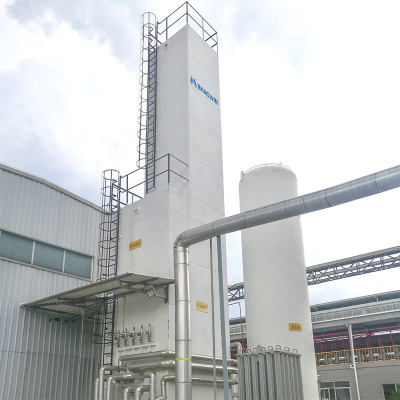
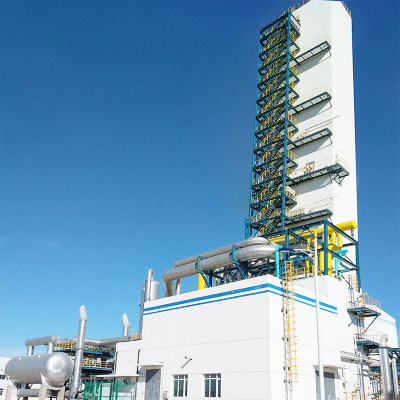
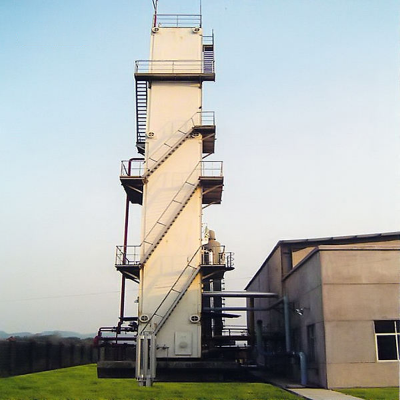
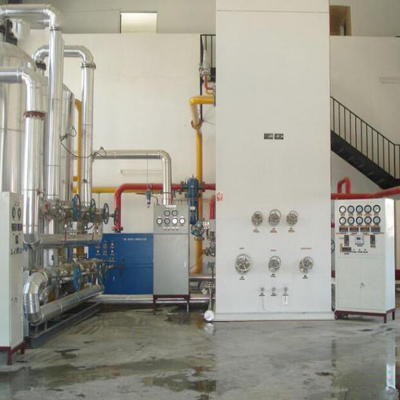
Cryogenic Air Separation Plants produce nitrogen through cryogenic distillation.
Here are the basic steps to the cryogenic nitrogen generation process:
Air Compression
First, we must compress our feed air
Air Purification
We then remove water and carbon dioxide from the compressed air.
Cryogenic Cooling
After purification, we’ll further cool the air to cryogenic temperatures.
Air Liquefaction
The cryogenic temperatures will liquefy the incoming air stream.
Cryogenic Distillation
In our distillation column, we can separate nitrogen from oxygen and argon.
Nitrogen Collection
Finally, we collect liquid or gaseous nitrogen.
Another advantage of cryogenic nitrogen generation is its ability to produce other gases.
A Cryogenic Air Separation Plant can produce oxygen and argon as byproducts.
l Cryogenic Air Separation Plant
l Air Separation Unit
Here is a list of the primary components you will find in a nitrogen generator:
Air Compressor
A nitrogen generator requires a certain level of feed air pressure.
The compressor’s efficiency will affect the nitrogen generators energy usage.
Air Dryer
The compressed air dryer eliminates water vapor from the air.
Dry air prevents premature degradation of the adsorption material.
Air Filters
Removing particles and oil aerosols from the air will prolong the life of your system.
Ultimately, clean feed air equals a more reliable system.
Adsorption Towers
PSA nitrogen generators have vessels filled with molecular sieves.
These towers act as the heart of the PSA nitrogen generation process.
The towers will switch between production and regeneration.
Nitrogen Buffer Tank
A nitrogen buffer tank acts to even out the nitrogen flow.
It can also compensate for sudden changes in nitrogen demand.
Control System
An industrial controller, or PLC, will monitor and control:
l Valve positions
l Pressure
l Flow
l Purity
l Any alarm conditions
A control system makes it easier to automate nitrogen generator operation.
Feed Air Quality
Poor inlet air quality can damage molecular sieve adsorption materials.
Operating Pressure
PSA generator performance relies heavily on proper operating pressure.
Nitrogen Purity
The higher the desired purity, the more separation stages will be necessary.
Feed Air Temperature
Ambient temperature can impact the effectiveness of the adsorption process.
Adsorbent Quality
The quality of molecular sieve adsorbents will impact nitrogen generation.
|
Feature |
PSA |
Membrane |
Cryogenic |
|
Capacity |
Small-Medium/Large |
Small-Medium |
Medium-Large |
|
Purity |
High |
Moderate-High |
Very High |
|
Startup |
Fast |
Very Fast |
Longer |
|
Equipment Size |
Compact |
Very Compact |
Large |
|
Liquid Nitrogen |
No |
No |
Yes |
|
Oxygen Production |
No |
No |
Yes |
|
Typical Use |
Industrial Nitrogen |
Compact Applications |
Large Gas Plants |
Typical Use Industrial Nitrogen Compact Applications Large Gas Plants
Factors such as application size, purity requirements, and startup time will determine which nitrogen generation technology will suit your needs best.
Food Processing
Nitrogen can be used for:
Food packaging
Beverage protection
Food preservation
Electronics Manufacturing
Uses for nitrogen in electronics include:
Semiconductor manufacturing
Soldering
Electronic assembly
Chemical Industry
Nitrogen is used to create inert environments for:
Tank inerting
Pipeline purging
Chemical storage
Metal Processing
Nitrogen generators are used in:
l Heat treatment
l Furnace protection
l Laser cutting
Pharmaceutical Industry
Nitrogen helps protect sensitive pharmaceutical products.
Oil and Gas
Nitrogen generators are used for:
l Pipeline purging
l Tank inerting
l Equipment maintenance
l Automotive
Nitrogen Flow
Determine your average and peak nitrogen requirements.
Nitrogen Purity
How pure does the nitrogen need to be? Is compressor air purity enough?
Outlet Pressure
Will your Nitrogen Generator need to overcome certain pressure requirements?
Operating Hours
Will your nitrogen generator run 24/7? Or only during regular business hours?
Installation Space
Do you have the space for a large system? Or would you benefit from a compact design?
Energy Usage
Selecting a nitrogen generator can be expensive. Make sure to evaluate total cost of ownership.
Nanjing Bangwin Gas Co.,Ltd supplies a variety of nitrogen generation and liquefaction equipment.
From Nitrogen Generators to Cryogenic Air Separation Plants.
Here are some of the nitrogen generation solutions we offer:
l Nitrogen Generator
l PSA Nitrogen Generator
l Nitrogen Generation Plant
l Nitrogen Liquefaction Plant
l Cryogenic Air Separation Plant
l Air Separation Unit
l VPSA Oxygen Plant
l Industrial Oxygen Plant
Our engineers can design a custom system to meet your specific needs.
Whether you require a high purity or high flow system, we can engineer a solution based on:
l Nitrogen needs
l Nitrogen purity
l Desired outlet pressure
l Plant location
l Production volume
Contact Bangwin Gas today to receive a free quote for your custom nitrogen generator.
https://bangwingascylinder.com/
1. How does a nitrogen generator work?
A nitrogen generator separates nitrogen from compressed atmospheric air using PSA, membrane, or cryogenic separation technology.
2. What is the working principle of a PSA nitrogen generator?
A PSA generator uses molecular sieves to adsorb oxygen and allow nitrogen to pass through.
3. How does a membrane nitrogen generator work?
A membrane separates gases according to their different permeation rates.
4. How does a cryogenic nitrogen generator work?
A cryogenic system cools air to extremely low temperatures and separates nitrogen through cryogenic distillation.
5. Which nitrogen generator is best?
PSA systems suit many industrial applications. Membrane systems suit compact applications. Cryogenic systems suit large-scale production.
6. Can a nitrogen generator produce liquid nitrogen?
Standard PSA and membrane generators produce gaseous nitrogen.
A dedicated nitrogen liquefaction system can convert nitrogen gas into liquid nitrogen.
7. What affects nitrogen generator efficiency?
Feed air quality, operating pressure, purity, temperature, adsorbent quality, and system design affect performance.
Nitrogen Generator Working Principle will vary depending on the type of nitrogen generator.
PSA Nitrogen Generators use molecular sieve technology to produce high purity nitrogen.
Membrane Nitrogen Generators produce nitrogen using selective gas permeation.
Cryogenic nitrogen generators produce nitrogen through the distillation of liquefied air.
PSA nitrogen generators are ideal for many applications where nitrogen is needed on-site.
Cryogenic nitrogen generation is better suited for large production facilities that need massive quantities of nitrogen.
Remember to consider your current and future nitrogen needs when selecting a nitrogen generation system.
Contact Bangwin Gas for more information on custom nitrogen generation systems.
About Us
Explore Nitrogen Generation Systems from Nanjing Bangwin Gas



 IPv6 شبكة مدعومة