-
WhatsApp / Mob : +86 156 5177 2521
-
البريد الإلكتروني : mrwin@cnbangwin.com
WhatsApp / Mob : +86 156 5177 2521
البريد الإلكتروني : mrwin@cnbangwin.com

Cryogenic Liquid Oxygen Plant: Engineering & Sourcing Guide
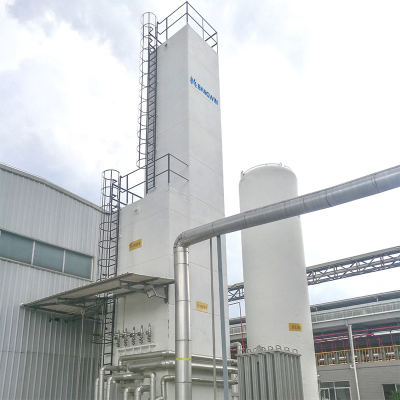
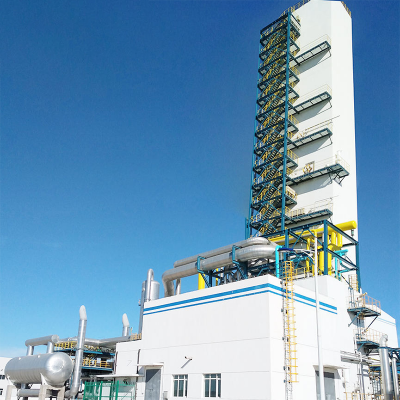
Nov 03 , 2026A cryogenic liquid oxygen plant is an industrial air separation facility that cools, liquefies, and fractionally distills atmospheric air to produce high-purity liquid oxygen (LOX), typically at purities of 99.6% or higher. It is the most economical and scalable technology for operations requiring large-volume oxygen production (above 50–100 Nm³/h) or central storage and merchant distribution. Compared to Pressure Swing Adsorption (PSA) systems, cryogenic plants deliver higher purity levels, produce storable liquid product, and offer significantly lower unit production costs at scale.
A cryogenic liquid oxygen plant separates atmospheric air based on the differing boiling points of its constituent gases: nitrogen (-195.8°C), argon (-185.8°C), and oxygen (-182.9°C).
The standard manufacturing train consists of five integrated stages:
Air Compression and Filtering
1. : Multistage centrifugal or screw compressors draw ambient air, filter out airborne particulates, and elevate pressure to working levels (typically 0.5–3.0 MPa depending on the process cycle).
Pre-cooling and Molecular Sieve Purification
2. : Air passes through a chiller unit and a molecular sieve adsorbent bed, which removes moisture, carbon dioxide (CO₂), and trace hydrocarbons (CₙHₘ) to prevent freezing in downstream cryogenic equipment.
Refrigeration and Expansion
3. : Plate-fin heat exchangers cool the purified air against departing cold waste streams. Turbo-expanders provide the necessary cryogenic refrigeration through isentropic expansion.
Fractional Distillation (Cold Box)
4. : The air enters double-column distillation columns housed inside an insulated cold box. Nitrogen boils off at the top of the column due to its lower boiling point, while high-purity liquid oxygen collects at the sump.
Product Extraction and Storage
5. : Liquid oxygen is withdrawn and transferred directly to vacuum-insulated cryogenic storage tanks for bulk distribution or vaporized for pipeline delivery.
High-purity liquid oxygen must comply with strict regional and international quality benchmarks:
Industrial Grade Oxygen
● : Governed by standards such as ISO 14175 or regional industrial codes, industrial LOX requires ≥99.5% purity. It is vital for steelmaking, oxy-fuel cutting, chemical synthesis, and industrial wastewater treatment.
Medical Grade Liquid Oxygen
● : Regulated by the European Pharmacopoeia (Ph. Eur.), United States Pharmacopeia (USP), or regional health ministries, medical LOX mandates purities between 99.5% and 99.9%, alongside strict limits on carbon monoxide (≤5 ppm), carbon dioxide (≤300 ppm), moisture (≤67 ppm), and volatile hydrocarbons.
Selecting between cryogenic distillation and Pressure Swing Adsorption (PSA) depends directly on demand volume, physical state requirements, and distribution logistics.
|
Technical Parameter |
Cryogenic Liquid Oxygen Plant |
PSA / VPSA Oxygen Generator |
|
Output State |
Liquid (LOX) and/or Gas (GOX) |
Gas (GOX) only |
|
Maximum Oxygen Purity |
99.6% – 99.9% |
93% ± 3% (90% – 95%) |
|
Economic Production Range |
Medium to High (>50 Nm³/h up to 50,000+ Nm³/h) |
Low to Medium (5 – 200 Nm³/h) |
|
Product Storage & Logistics |
High density (1 L LOX ≈ 800 L gas at STP); bulk transportable |
Requires immediate consumption or local high-pressure compression |
|
Capital Expenditure (CAPEX) |
Higher initial investment |
Lower initial investment |
|
Unit Operating Cost (OPEX) |
Significantly lower per ton at scale |
Higher power cost per unit of pure O₂ |
|
Multi-product Capability |
Simultaneous liquid O₂, N₂, and crude Ar production |
Single product stream (O₂ only) |
System sizing requires balancing current base demand against projected 3-to-5-year market growth:
Calculate Peak vs. Average Demand
1. : If your facility supplies hospitals or regional cylinder fill plants, factor in peak seasonal demand surges by sizing the storage tank volume rather than oversizing the base ASU column.
2. :Skid-Mounted Modular Units vs. Site-Erected Units
Skid-Mounted Systems (50 – 300 Nm³/h)
○ : Pre-assembled and tested inside containerized frames at the factory. They reduce on-site civil work by up to 60% and are ideal for rapid deployment across developing industrial hubs.
Site-Erected Plants (>500 Nm³/h)
○ : Built on permanent concrete foundations, offering optimized aerodynamic efficiency and lower specific power consumption for large industrial utility zones.
Electricity represents 70% to 80% of the ongoing lifecycle cost of air separation:
Specific Energy Consumption
● : Modern low-pressure cryogenic systems consume approximately 0.45 – 0.75 kWh per Nm³ of gaseous oxygen equivalent produced (or 0.8 – 1.2 kWh/kg for liquefied product).
Cooling Water and Ambient Temperature Factors
● : In tropical regions (such as Southeast Asia), elevated ambient temperatures (>35°C) and high relative humidity reduce air density and cooling tower efficiency. Specifying oversized evaporative pre-coolers and tropicalized cooling towers prevents operational derating.
Inadequate Hydrocarbon Monitoring
● : Trace acetylene and hydrocarbons entering the liquid oxygen sump present critical combustion risks. Plants must feature dual-bed molecular sieves and continuous online hydrocarbon gas chromatographs.
Ignoring Foundation Permafrost Protection
● : Cryogenic cold boxes operate below -180°C. Without proper foundation elevation or ground heating elements, soil moisture freezes, causing frost heaving that misaligns column pipework.
Poor Defrosting Procedures
● : Inadequate dry gas purging during plant turnarounds leaves residual moisture, which causes valve freezing during subsequent re-cooling.
When selecting a cryogenic equipment engineering partner, technical procurement teams should verify:
Pressure Vessel and Quality Certifications
1. : ASME Section VIII Div 1/2, CE/PED, and ISO 9001/ISO 13485 (for medical oxygen equipment).
Cold Box Insulation Technology
2. : High-grade expanded perlite vacuum powder filling to minimize boil-off rates (BOR).
Control System Architecture
3. : Fully automated PLC/DCS systems with remote monitoring capabilities and automated trip sequences.
Turnkey Commissioning Support
4. : Availability of experienced site engineers for installation supervision, leak testing, and operator training.
For industrial gas companies and regional medical distributors seeking reliable air separation assets, Nanjing Bang Win Gas Equipment Co., Ltd. manufactures integrated cryogenic air separation units and customized gas processing systems.
The company provides skid-mounted and custom-engineered cryogenic liquid oxygen plant installations designed for stable operation in tropical and variable-load environments. By incorporating high-efficiency turbo-expanders, low-pressure distillation columns, and PLC automated process control, Bangwin gas separation systems help operators achieve consistent ≥99.6% oxygen purity with optimized specific power consumption.
Facilities planning to expand regional production can consult Nanjing Bang Win Gas Equipment Co., Ltd. to evaluate layout blueprints, thermodynamic mass-balance calculations, and project feasibility for dedicated or merchant gas supply.
A liquid oxygen plant requires integrated downstream handling systems to reach end customers.
To convert bulk liquid oxygen into merchant cylinder packages, plants utilize high-pressure cryogenic liquid reciprocating pumps and ambient air vaporizers feeding industrial and medical gas cylinders. Maintaining certified cylinder packages and validated manifolds ensures complete compliance from cryogenic production to the end user.
Cryogenic air separation units typically become economically viable at capacities starting from 50 Nm³/h of liquid oxygen equivalent. Below this threshold, PSA plants generally offer lower initial capital expenditure, though PSA cannot produce liquid oxygen directly.
A properly calibrated double-column cryogenic liquid oxygen plant achieves oxygen purities between 99.6% and 99.9%. This consistently exceeds the minimum 99.5% purity required for both medical USP/Ph. Eur. applications and industrial laser cutting.
A warm restart (initial cool-down from ambient temperature) takes between 12 and 24 hours for small-to-medium skid-mounted units, and up to 36–48 hours for large utility-scale plants. Once cold, restarting from a temporary standby mode takes 1 to 2 hours.
The only raw material is atmospheric air. Required site utilities include three-phase electric power, industrial cooling water (or closed-circuit chillers), dry instrument air for pneumatic valves, and a nitrogen purge source for initial commissioning.
Yes. Cryogenic air separation plants can be configured with auxiliary distillation columns to produce liquid nitrogen (LN₂) and crude or pure liquid argon (LAr) from the same atmospheric air feed, maximizing overall revenue.
The core static equipment—including the aluminum plate-fin heat exchangers and stainless steel distillation columns inside the perlite-insulated cold box—has an operational design lifespan of 20 to 25 years with routine maintenance of rotating compressors and expansion turbines.



 IPv6 شبكة مدعومة